Fragrance Beginner's Guide
How to Buy Your First Serious Fragrance (Without Getting It Wrong)
Most people buy fragrance the wrong way. Here's what the people who buy it right actually do — and how to figure out what you actually want before you spend the money.
The most common way people buy fragrance is also the worst way. You walk into a department store, spray something on a card, think it smells good, buy it, and wonder two weeks later why you never reach for it. The problem isn't the fragrance. The problem is that paper cards tell you almost nothing, department stores are terrible places to make smell decisions, and nobody teaches you how to evaluate a scent before committing.
This is that lesson.
Start with what you already own
If you have any fragrance at all — even a forgotten gift, even a cheap body spray — smell it now and answer honestly: do you like it? If yes, what specifically? The citrus at the start? The warmth that comes later? The way it disappears? If no, why not? Too sweet? Too sharp? Too clean in a way that feels like laundry detergent rather than something intentional?
Most people can describe what they don't want more clearly than what they do. Work with that. It's more useful than starting from scratch.
How a fragrance actually works
Every fragrance moves through three stages. Top notes are the first fifteen minutes — usually citrus, light herbs, something sharp. This is the first impression and not the actual fragrance. Heart notes emerge once the top fades and carry the real identity of the scent: florals, woods, spice, resin. Base notes are what's left after an hour — musk, amber, vetiver, vanilla — and what you'll be wearing all day.
Buying on the top note is the most common beginner mistake. The citrus burst that grabbed you in the store can give way to a heavy base you didn't expect. Always wait through at least the heart before you decide.
How to actually test something
Spray on skin. Paper strips are for deciding if something deserves five more minutes of your attention. They tell you nothing about how a fragrance develops on you specifically, and your skin changes everything — pH, temperature, hydration all matter.
Test one thing at a time. Smelling six fragrances in a row means you'll remember none of them clearly. Pick the one that caught you, spray it on your wrist, and leave the store. Go have a coffee. Come back to it two hours later. That's the real evaluation.
Samples exist. Use them. Every serious retailer has them, and dedicated sample services like Surrender to Chance will send you 1–2ml vials for a few dollars. Wearing something for a full day before spending $150 on it is just common sense.
Concentration, simply
Eau de Cologne: 2–4%, lasts an hour or two. Casual, light.
Eau de Toilette: 5–15%, lasts 3–5 hours. The most common format. Good for work or warm weather.
Eau de Parfum: 15–20%, lasts 6–10 hours. More projection, richer development. Usually the better choice if a fragrance offers both EDT and EDP.
Parfum or Extrait: 20–30%+, 8–12 hours. Barely any projection — it stays close to skin. Apply sparingly.
Higher concentration doesn't mean better. But if you've always found that fragrances disappear on you, the EDT-to-EDP jump in the same fragrance is often the fix.
What things actually cost
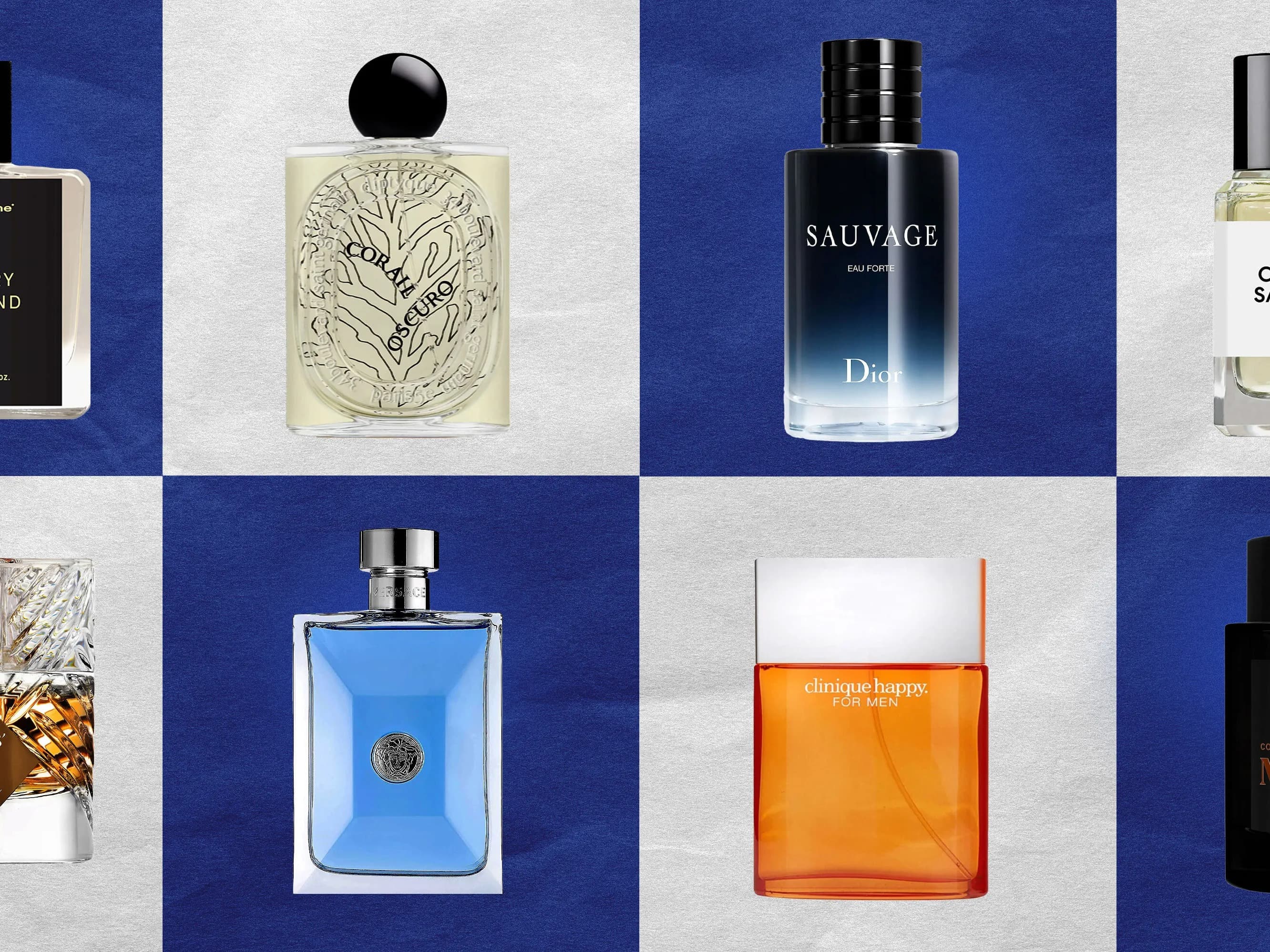
$50–80: Prada L'Homme, Versace Eros, Armani Acqua di Giò Profondo. Genuinely good fragrances.
$100–180: Dior Sauvage EDP, Hermès Terre d'Hermès, Maison Margiela Replica. This is where quality starts to become consistently noticeable.
$200+: Creed, Byredo, the broader niche world. You're paying for better ingredients and wearing something fewer people will recognise. Whether that matters to you is a personal question.
Buy the smallest size first. A 30ml of something you love is worth more than a 100ml of something you only sort of like.
When to wear what
Heat amplifies everything. A fragrance that's perfectly calibrated in December can be overwhelming in July. Fresh, citrus, and aquatic scents work in warm weather. Woods, resins, and richer musks suit cold. This isn't a rule — it's just what tends to happen.
For the office: nothing that announces itself before you do. Soft musks, light woods, restrained citrus.
For evenings: this is where the more interesting and projecting fragrances earn their place.
Where to buy
Authorised retailers and brand boutiques: safest for authenticity, usually have testers, sometimes have samples.
Fragrancenet, FragranceX, Notino: legitimate discounters. Real product, lower prices, no atmosphere. Good once you know what you want.
Sample services: best for exploring before you commit.
Avoid anything sold by unnamed third parties without authentication, anything labelled 'inspired by' or 'impression of,' and anything in a bottle that looks slightly off. Counterfeit fragrance is a real market. The fakes are convincing in photos and often smell cheap on skin.
The first serious fragrance you buy doesn't have to define you. It just has to be something you'll actually wear. Start there and work outward.