Watch Beginner's Guide
A Beginner's Guide to Watches: Every Part, Term, and Concept Explained
From case diameter to tourbillons, this is the complete reference for understanding what a watch is actually made of — and what every term means.
A watch is a small machine strapped to your wrist, and like any machine, it gets easier to understand once you know its parts. This guide covers every component — what it's called, what it does, and why it matters. No jargon left standing without an explanation.
The Case
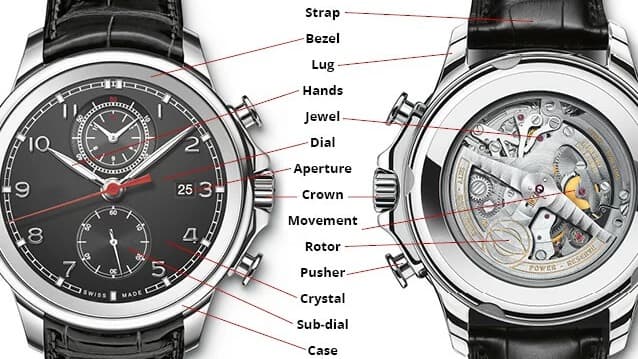
The case is the metal shell that houses the movement. Case diameter is measured in millimetres across the widest point, not including the crown. Most modern watches land between 36mm and 44mm. Bigger doesn't mean better — it means different. A 42mm sport watch wears nothing like a 42mm dress watch, because proportions, thickness, and lug-to-lug all change how the thing actually sits on your wrist.
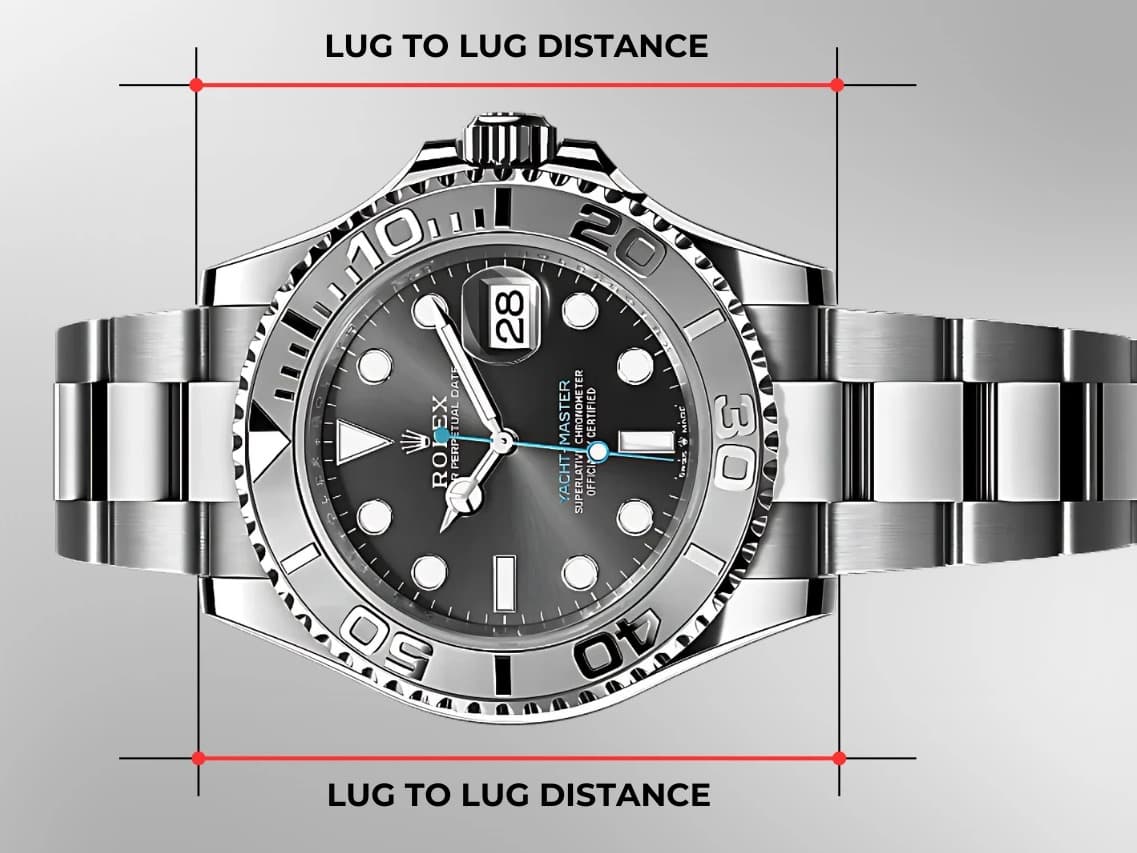
Lug-to-lug distance — measured tip to tip from one lug to the opposite — matters more than diameter for fit. A 40mm watch with long lugs will hang off a smaller wrist in a way a shorter lug-to-lug at the same diameter won't.
Case thickness affects how a watch slides under a cuff and how it reads visually. Thin reads elegant. Thick usually means a bigger movement or more complications packed inside.
Case materials are most often stainless steel (316L is standard; 904L is harder and more corrosion-resistant, used by Rolex), titanium (lighter, tougher against corrosion), gold (yellow, white, or rose), or ceramic. Ceramic resists scratching well but is brittle — it can chip or shatter from a hard knock. Titanium shows up in sport and field watches where saving weight on the wrist matters over long wear.
Water resistance is rated in meters or ATM (atmospheres). 3 ATM / 30m means splash-resistant — keep it away from the pool. 10 ATM / 100m handles swimming fine. 20 ATM / 200m is built for serious water sports. One thing most people get wrong: these numbers reflect static pressure during testing, not what's safe while you're moving through water. A 30m-rated watch should not go in the shower.
The Dial
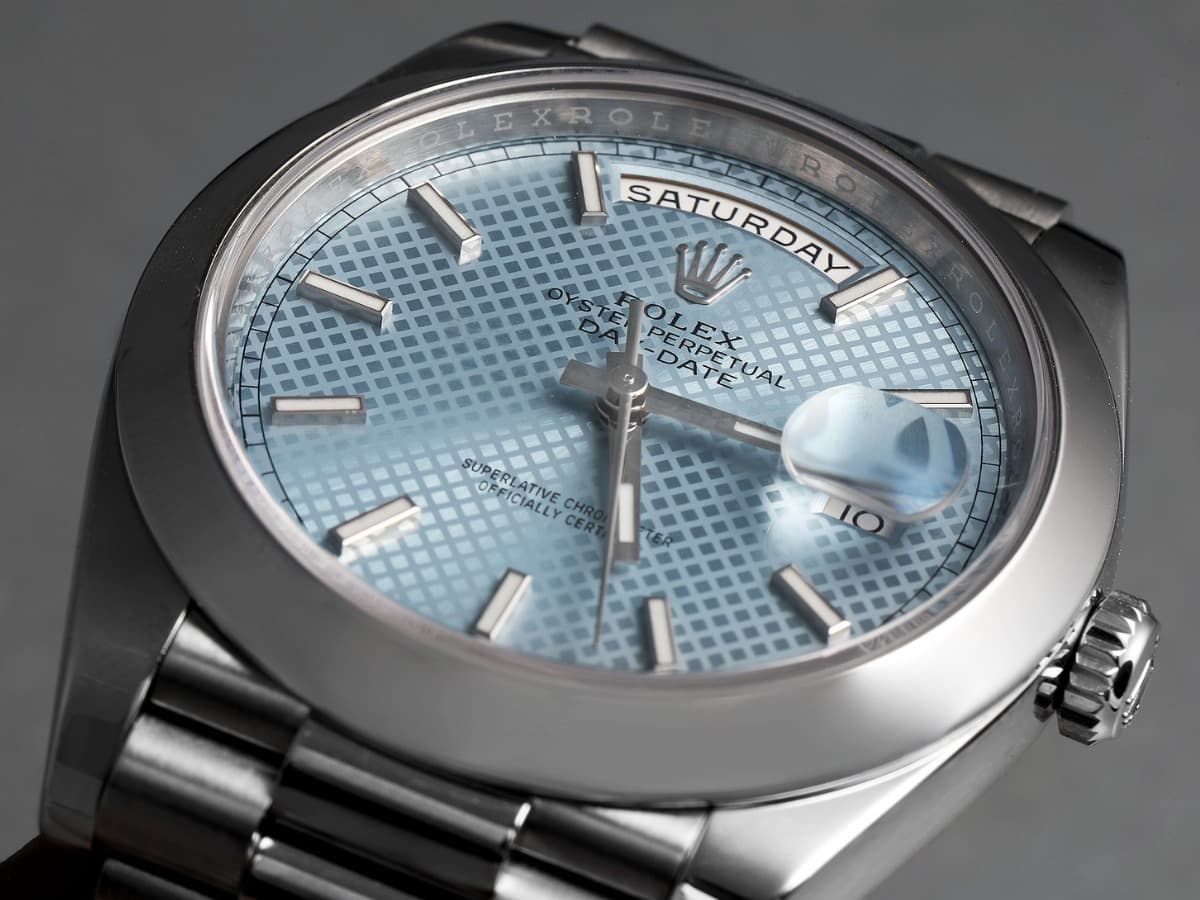
The dial is the face — the part you actually read. Hour markers (also called indices) mark the hours around the dial. They can be applied (physically raised and adhered to the dial surface), printed flat, or cut in as recesses. Some dials use Roman numerals or Arabic numerals instead of abstract indices.
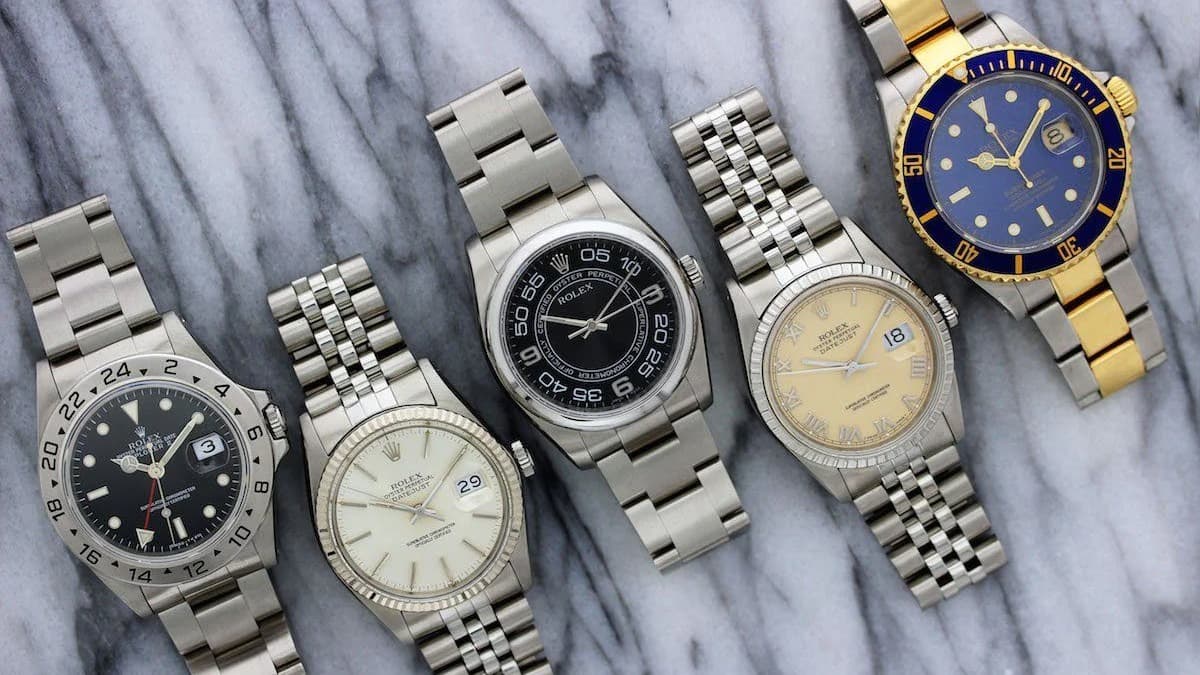
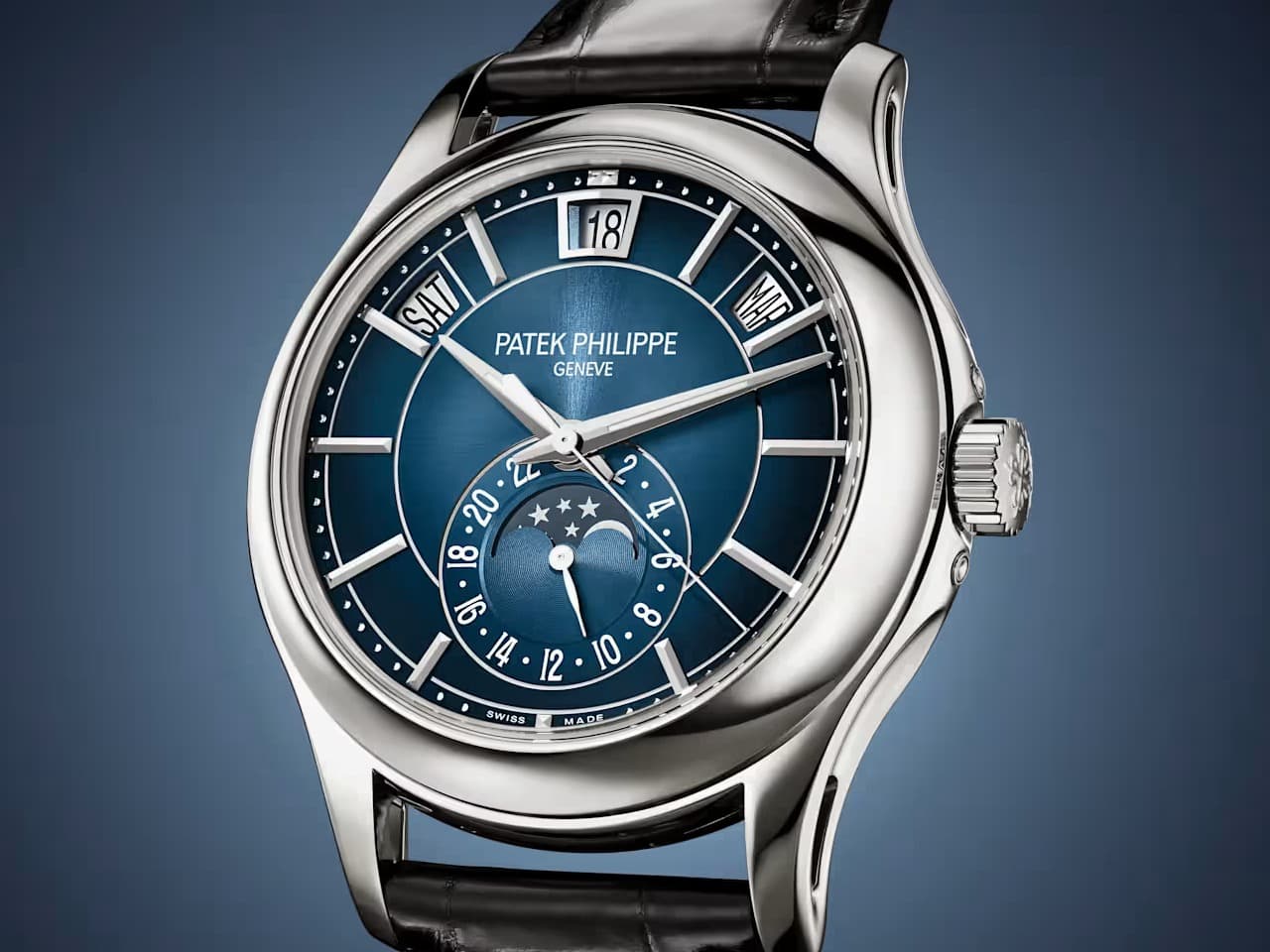
Hands point to hours, minutes, and seconds. A watch with only hour and minute hands is a two-hander. Add a running seconds hand and it's a three-hander. Hand shapes vary significantly — dauphine (tapered diamond profile), sword (narrow and pointed), baton (straight and thin), and Breguet (open-tipped) are the most common styles.
The dial surface itself can be lacquered (flat, even light reflection), sunray-brushed (radiating lines that shift tone as the light changes), guilloché (a hand-engraved repeating pattern associated with dress and dress-adjacent watches), or textured in various other ways. None of these is better than another — they serve different aesthetics.
A subdial is a smaller, secondary dial within the main dial face. You'll find them used for complications: a running seconds display, chronograph counters, a day or date window.
The Bezel
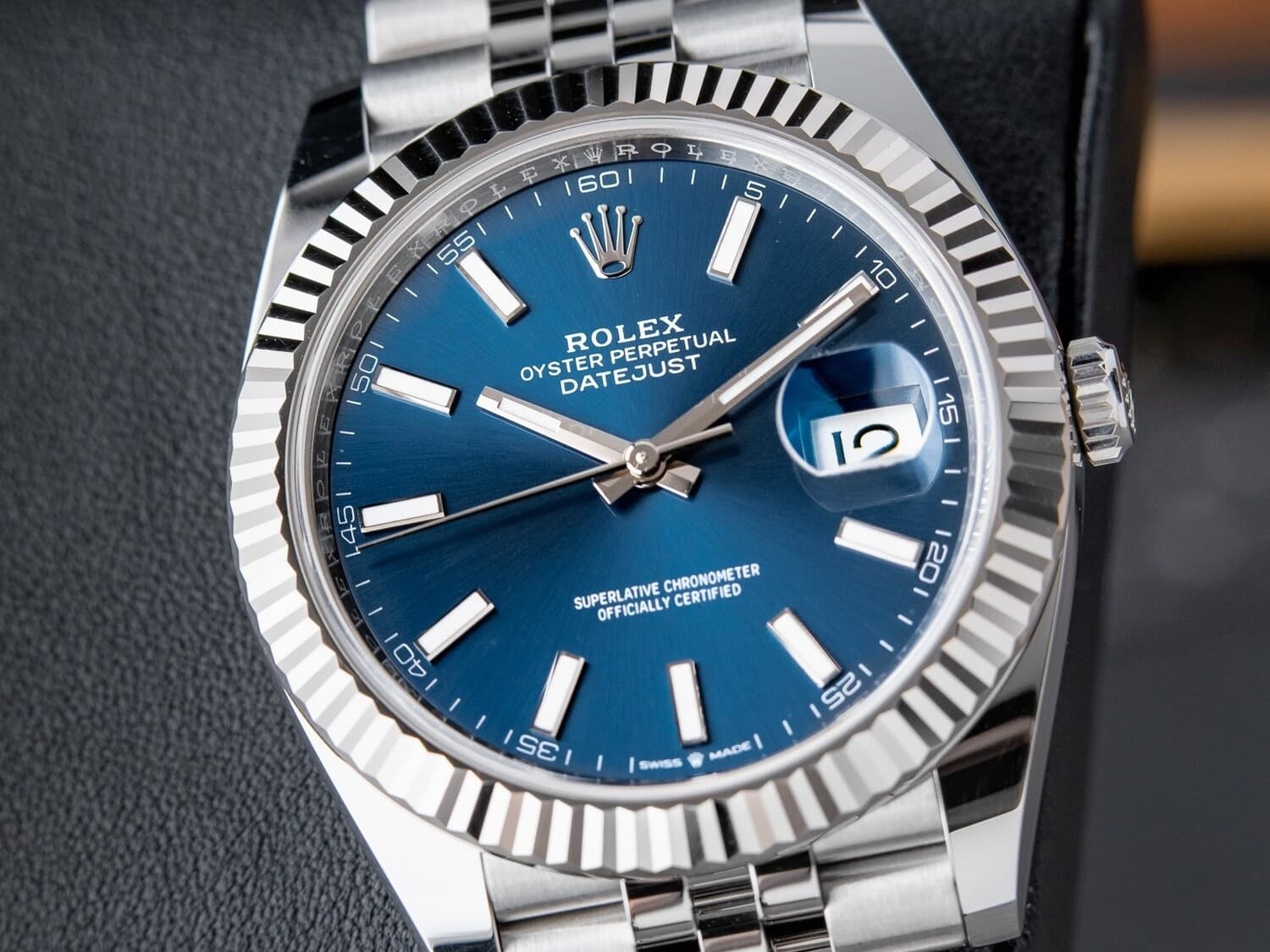
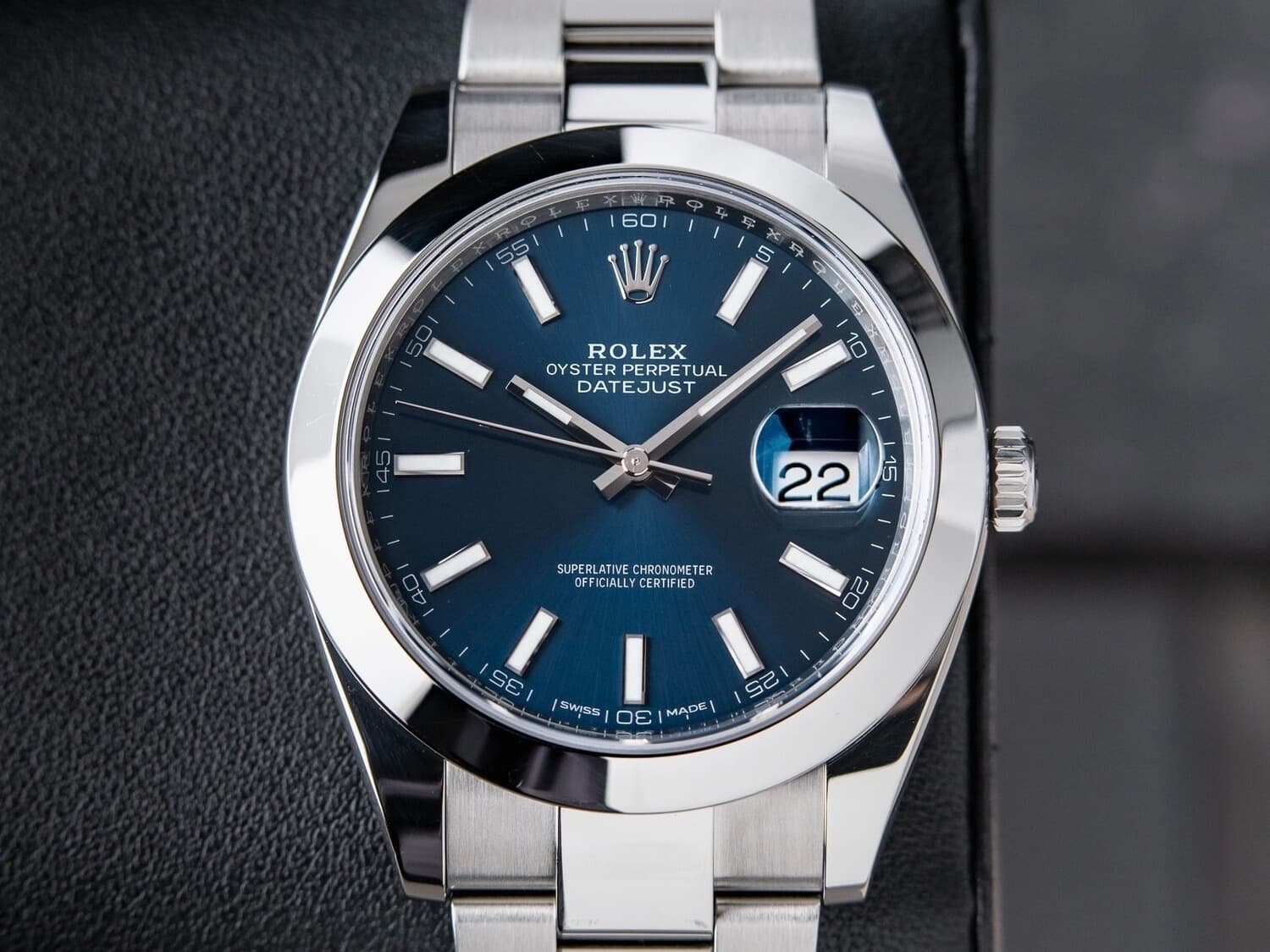
The bezel is the ring that frames the dial. Fixed or rotating, its design usually tells you something about what the watch is for.
A smooth bezel is plain and flat — standard on dress watches. A fluted bezel has vertical grooves cut around its circumference. It's most associated with Rolex gold models, where the fluting was originally a functional way to reduce gold usage while adding structural rigidity. Today it's decorative. A coin-edge bezel has fine notching similar to the edge of a coin — subtler than fluting, common on vintage and classically styled pieces.
A unidirectional rotating bezel turns only counterclockwise. It's the dive watch standard, and the direction matters: the elapsed-time scale (60 minutes) can only be moved to underestimate remaining time, never overestimate. Turn it the wrong way and you'd think you had more air than you do. Unidirectional bezels prevent that. A bidirectional bezel rotates both ways — you'll find it on GMT watches and pilot watches, where it's used to track a second time zone or act as a countdown timer.
A tachymeter is a scale on the bezel or dial used to calculate speed over a fixed distance. It's mostly associated with chronographs.
Bezel material matters for durability. Steel scratches. Aluminum scratches faster and more visibly. Ceramic — like the Cerachrom used on modern Rolex sports models — is significantly more scratch-resistant, though it can chip on a bad impact.
The Crystal
The crystal is the transparent cover protecting the dial. There are three types worth knowing.
Acrylic (hesalite, plexiglass) is the oldest and softest. It scratches easily but can be buffed back to clear with the right compound. Still used on some vintage pieces and intentionally retro modern watches.
Mineral glass is harder than acrylic and standard on mid-range watches. Better scratch resistance, but it's more prone to chipping and shattering under impact than sapphire.
Sapphire crystal is synthetic corundum — 9 on the Mohs hardness scale, just below diamond. It resists scratches extremely well. The tradeoff is that a sufficiently angled hard impact can shatter it cleanly. Most watches north of $500 use sapphire. Anti-reflective coating on the underside reduces glare and helps readability in bright light.
The Movement
The movement is the engine inside the case. More than anything else, it determines what a watch costs and what owning it feels like.
Quartz movements run on a battery. An electrical current causes a quartz crystal to oscillate at 32,768 Hz — the circuit divides that frequency down to one pulse per second, which moves the hands. Quartz is extremely accurate, typically within ±15 seconds per month. It's inexpensive to produce, needs minimal servicing, and keeps better time than most mechanical movements. The vast majority of watches sold worldwide are quartz.
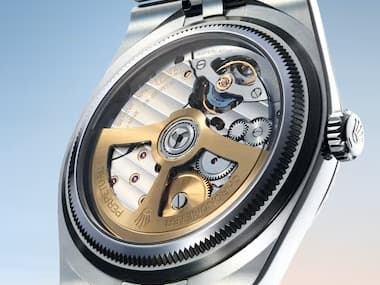
Automatic movements — also called self-winding — are mechanical. A rotor, a semicircular weighted piece, swings freely with the motion of your wrist and winds a coiled mainspring. That mainspring stores tension and releases it gradually through the gear train to drive the hands. The sweep of an automatic seconds hand is either smooth or broken into very fine increments (6, 8, or 10 beats per second depending on the calibre). No battery required, but if you leave it sitting unworn, it'll run down. Power reserve tells you how long a fully wound movement runs — typically 42 to 72 hours on a standard calibre.
Manual-winding movements are mechanical like automatics but have no rotor. You wind the mainspring yourself by rotating the crown. The benefit is a thinner movement profile (no rotor taking up space) and a more direct feel — some collectors prefer the ritual of winding a watch each morning.
Complications
A complication is any function beyond basic hours and minutes.
A date complication shows the current date through an aperture — typically at 3 or 6 o'clock. A day-date adds the day of the week alongside. A GMT complication adds a fourth hand that completes one revolution every 24 hours, read against a 24-hour scale or bezel to track a second time zone. A chronograph is a stopwatch built into the watch — the pushers at 2 and 4 o'clock start, stop, and reset. A moonphase shows the lunar cycle through an aperture, useful historically for navigation and tide prediction, now mostly appreciated for its craft. A tourbillon is a rotating cage holding the escapement — one revolution per minute — designed to counteract gravitational error on pocket watches. In a wristwatch it's largely a technical showpiece, but it remains one of the most demanding things to build in horology.
The Bracelet and Strap
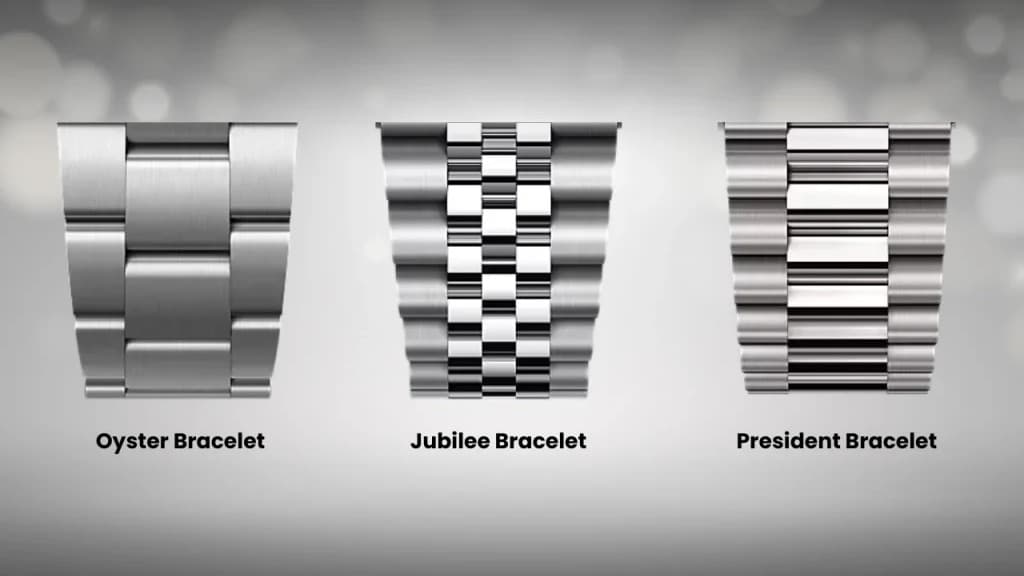
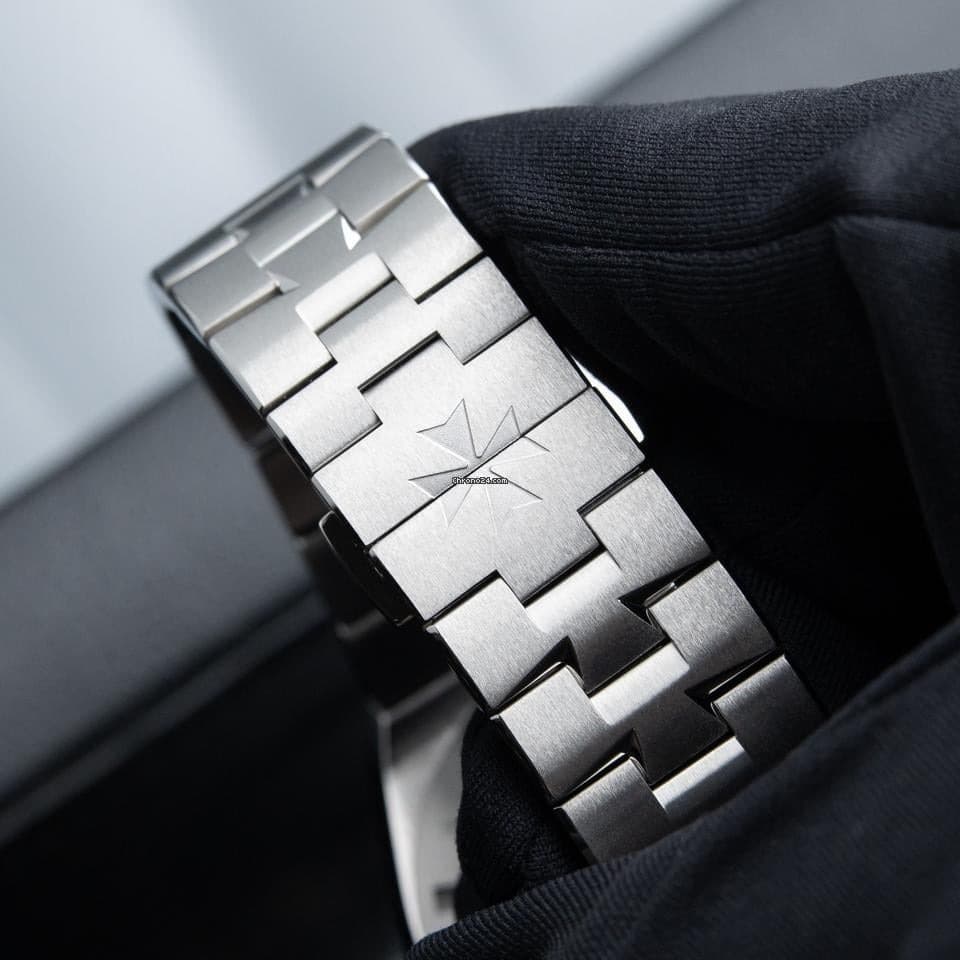
The bracelet is a metal link band. The Oyster (three-piece flat links) is the workhorse — solid and versatile. The Jubilee (five-piece links) is dressier and more flexible on the wrist. Integrated bracelets flow directly from the case shape and are common on sport and luxury sport watches. Clasp styles include the standard folding clasp, the butterfly clasp (two opposing flaps, generally more secure), and deployment clasps with pushbutton release.
Lug width is the gap between the lugs where the bracelet or strap attaches — measured in millimetres. It determines what straps fit your watch. Common widths are 18mm, 20mm, and 22mm. Get this wrong and nothing fits.
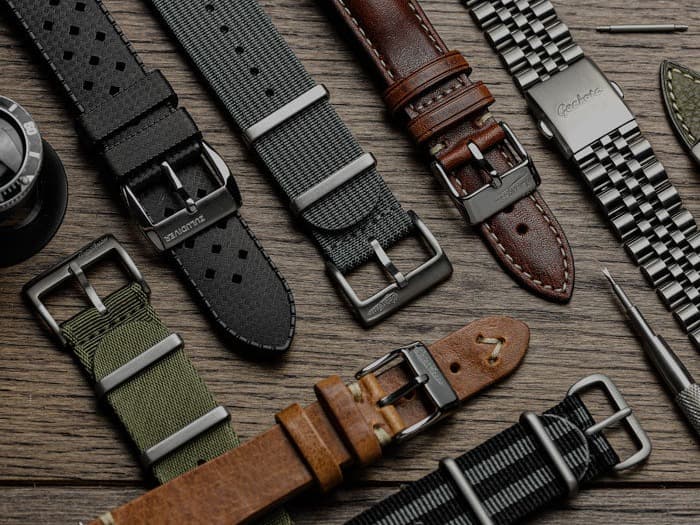
Straps are non-metal: leather for dress, rubber or silicone for sport, nylon or canvas for casual and field use. NATO straps are a specific type — they thread underneath the case between the movement and the case back, passing through the spring bars rather than looping around them. If a spring bar fails on a standard strap, the watch falls. On a NATO, it doesn't.
The Crown
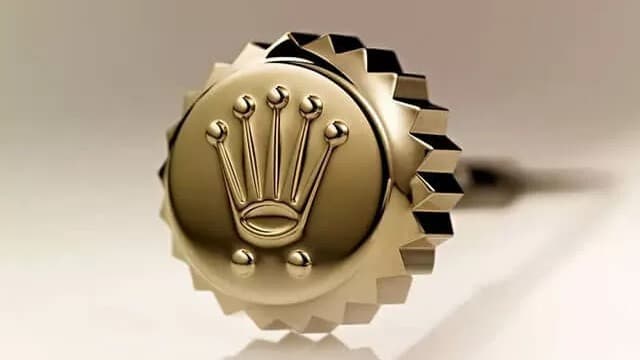
The crown is the small knob on the side of the case, almost always at 3 o'clock. In the fully pushed-in position it winds the movement (on manual and automatic watches). Pull it out one position and you can set the date. Pull it out fully and you set the time. A screw-down crown threads into the case, creating a seal that significantly improves water resistance. You have to unscrew it before you can do anything, and screw it back down after — skipping that step defeats the purpose entirely. An onion crown is oversized and knurled, designed for gloved operation on pilot watches.
The Case Back
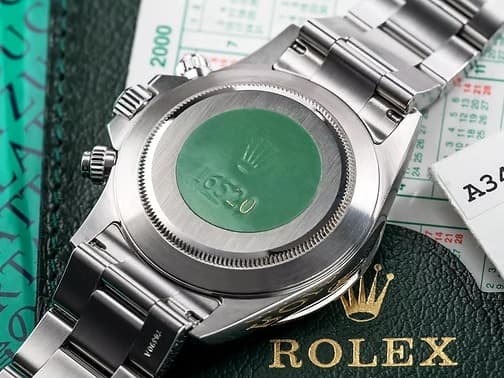
The case back closes the watch from behind. A solid case back is opaque — brushed, polished, or engraved steel. An exhibition case back (display back) uses a sapphire window so the movement is visible from the rear. If a brand is proud of what's inside — intricate finishing, a distinctive rotor, a signature calibre — they'll use an exhibition back. If they're not, they usually won't.
Putting It Together
That's the full vocabulary. Every part named, every term defined. Once you have it, you start seeing watches differently — noticing the transition between brushed and polished surfaces on a bezel, reading whether indices are applied or printed, understanding why a watch runs three days on a wind or only one. The hobby stops being confusing and starts being specific. Specificity is what makes it interesting.
Sources
- https://www.chrono24.com/vacheronconstantin/vacheron-constantin-overseas-vc-serviced-7700v-world-time-bracelet-straps--id44500184.htm
- https://www.levifamilyjewelers.com/post/what-is-the-importance-of-a-rolex-caseback-sticker
- https://www.watchgecko.com/?srsltid=AfmBOoop-70YdaqcVt0WvE34omEtQ0A2Fg_rp2mxkakByufqVBB0QCPU
- https://rubberb.com/strap-audemars-piguet-royal-oak-39mm-metal-bracelet-classic-series?srsltid=AfmBOopeNqXN0LdVrs6WE9TYF3exZ9idTG5naWcbZghzLfR4oDTIKhLX
- https://watchlab.sg/blog/types-of-watch-bands/
- https://www.roroos.com/blog/everything-you-want-to-know-of-the-rolex-crown/?srsltid=AfmBOoqDXYXqmtvHj3sgHspRzTXzPQB-PLw2e96dWZALbwcCQ5FM8tPU
- https://www.patek.com/en/collection/complications/5205g-013
- https://newsroom.rolex.com/watches/new-watches-2025/land-dweller
- https://watchlab.sg/blog/watch-size/