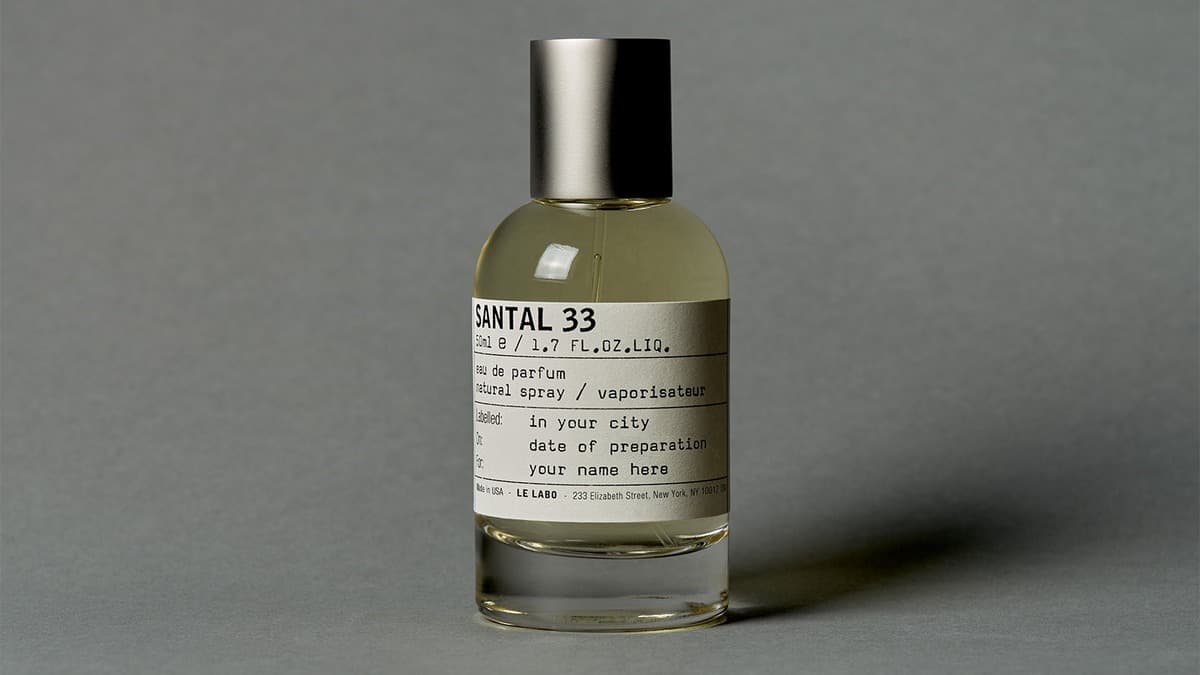
Fragrance Review
Le Labo Santal 33: The Most Discussed Fragrance of the Last Twenty Years
It became so ubiquitous it started a backlash. The backlash was wrong.
Santal 33 came out in 2011. By 2015 it had become the unofficial scent of a specific type of person — creative work, coastal city, apartment with exposed brick. By 2017 people were writing think pieces about it. The backlash started before most people had actually worn it.
Notes
Top: Cardamom, Iris, Violet
Heart: Ambrette, Sandalwood, Australian Sandalwood
Base: Cedarwood, Leather, Papyrus
None of that has anything to do with the fragrance.
Frank Voelkl built Santal 33 around one idea: sandalwood, but dry and a little smoky, with leather and iris adding texture that most woody fragrances don't bother to develop. The opening is cardamom and violet — spiced and faintly floral, burns off fast. What it leaves behind is the main event: sandalwood, cedar, papyrus, leather.
Warm but never sweet. Woody but never sharp. The sandalwood is the real kind — not a synthetic substitute — and in a market where that's increasingly rare, you can smell the difference. Leather and papyrus keep it from reading as a straightforward wood fragrance; there's a dry, slightly smoky quality underneath that gives it something to hold on to. It stays close to skin in a way that means it keeps showing up on people who don't even know they're wearing it.
Performance and Seasonality
Eight-plus hours, projection that stays personal rather than projecting across a room. This doesn't announce itself. It rewards proximity. Works across all seasons without demanding adjustments — the dry woody character adapts well to weather. Autumn and winter deepen the leather and papyrus notes; spring and summer keep it feeling clean rather than heavy.
Price and Context
$210+ for 50ml. Expensive and it knows it. Whether it's worth the price comes down to how much actual ingredient quality matters to you. The backlash was about the people wearing it — a separate thing from the fragrance entirely. Santal 33 is excellent. What someone does with it is their own problem.