Introducing
Rolex Drops Five New Oyster Perpetual Colorways for 2025
A bolder direction for the entry-level icon — five new dials that signal where Rolex is headed.
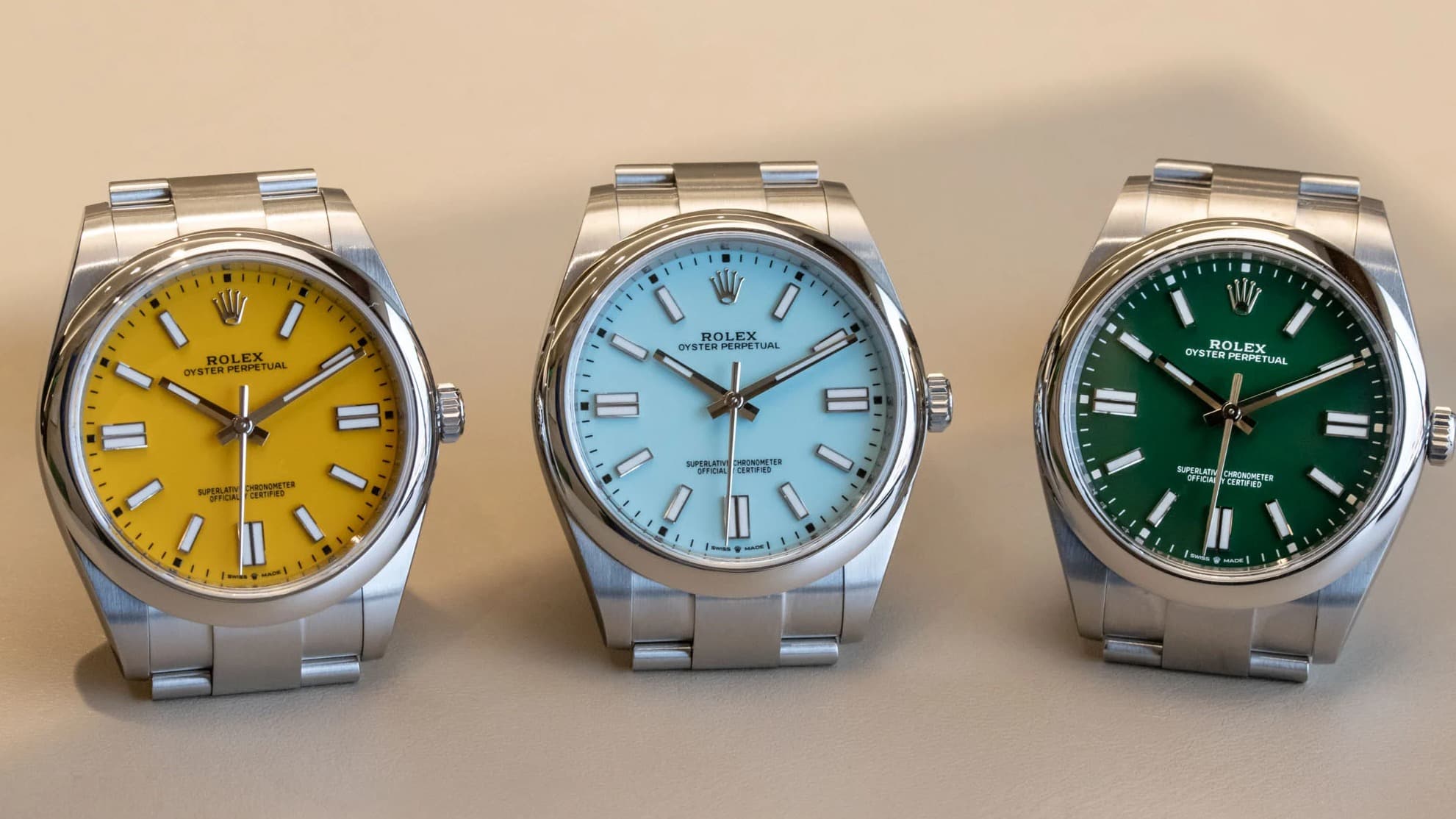
Rolex doesn't do press releases. No hype cycles, no countdowns, no social media teases. So when the Geneva maison quietly updated the Oyster Perpetual lineup with five new dial colours for 2026, the watch world leaned in the way it does when a quiet person says something unexpected.
The new colours — coral, sage, midnight teal, dusty lavender, and deep slate — continue a pivot toward expressive dials that started with the 2020 Tiffany Blue. But these feel different. The coral reads almost terracotta under warm light. The slate sits close to gunmetal. The sage lands somewhere between forest and architecture. These aren't pastels hedging their bets.
The 41mm case is unchanged: Oystersteel, sapphire crystal, screw-down crown, 100m water resistance. The movement is the 3230 calibre — Rolex's own, 70-hour power reserve, Chronergy escapement. Nothing new under the hood, which is fine. The point was never the movement.
What's interesting is the positioning. For years the Oyster Perpetual was the watch you bought when you couldn't afford a Datejust. Rolex seems to be deliberately reframing it — a clean, uncluttered canvas for people who want colour and craft without a calendar window interrupting the dial. Whether that repositioning sticks depends partly on how the new colours perform at retail and partly on whether the market decides to treat them like collector pieces or everyday watches.
Coral and sage will be the hardest to find. The slate will hit the secondary market at a premium almost immediately. The lavender might actually stay in display cases long enough for someone to try one on.
At $6,150 MSRP for the 41mm, the Oyster Perpetual remains one of the more accessible entry points into the Rolex ecosystem. Whether that's a reason to buy or a reason to look elsewhere is a question only you can answer.