Watch Review
Seiko Presage Sharp Edged GMT SPB221: Japanese Craft at $1,400
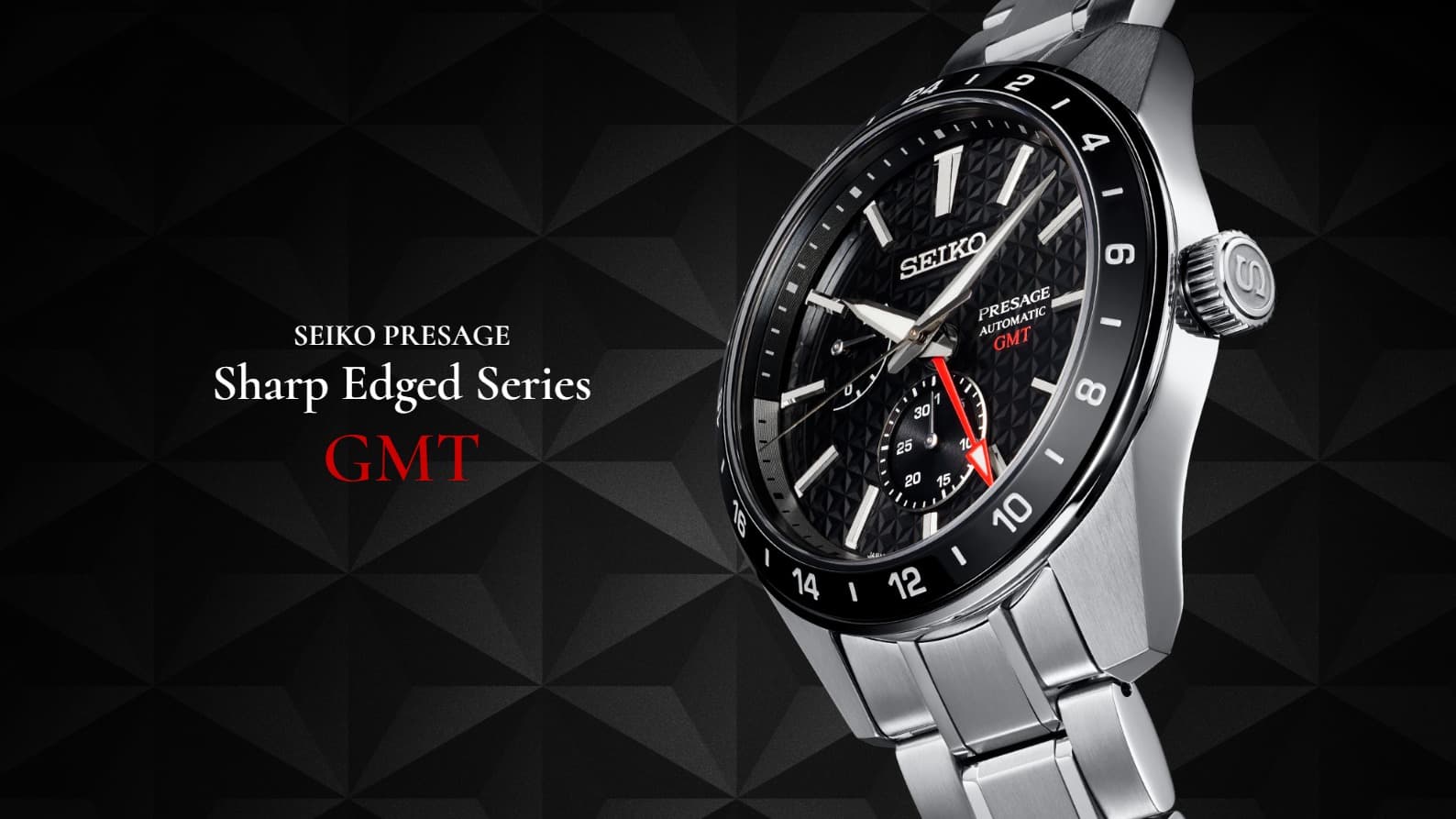
The SPB221J1 brings a GMT complication and Seiko's Sumi-iro ink-black dial to the Sharp Edged series. The Asanoha faceting is handwork that typically costs three times this price on a Swiss watch.
The Sharp Edged series was already doing something unusual for its price point. The SPB221J1 takes it further.
The ref. SPB221J1 — introduced in 2022 — is a 42.2mm GMT with Seiko's 6R64 calibre, an exhibition caseback, and a dial finished in Sumi-iro: the deep near-black of Japanese sumi ink. The Asanoha hemp-leaf motif is cut across the dial face using Seiko's Sharp Edged faceting technique, each surface polished at a precise angle. It retails at $1,400, which puts it above the rest of the Sharp Edged line — but this is a fundamentally different watch.
Case and Dial
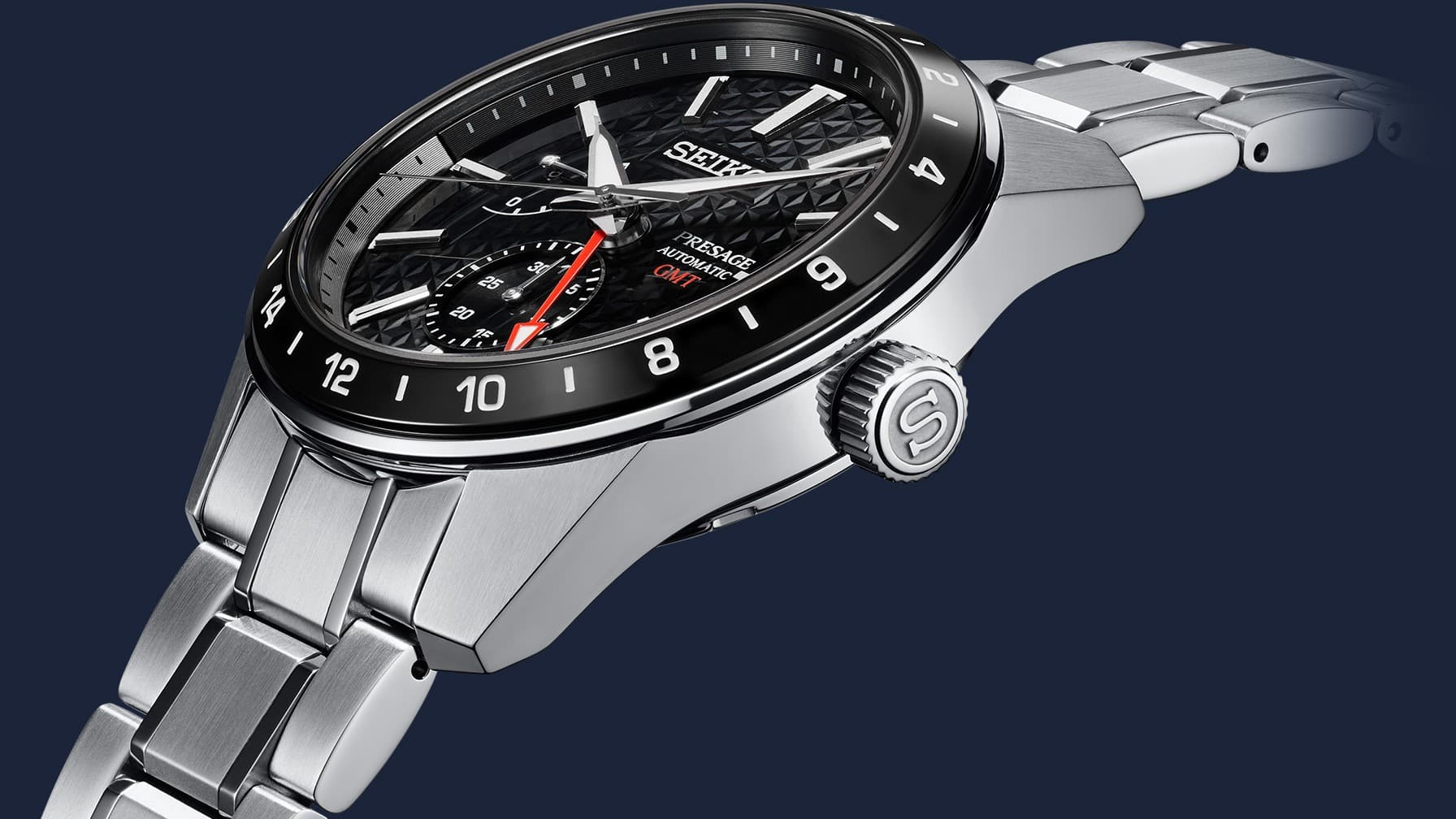
Forty-two point two millimetres, 13.7mm thick, 49.2mm lug-to-lug. Larger than the 39.3mm SPB167, but it wears more comfortably than those numbers suggest because the super-hard coated bracelet moves fluidly and tapers well toward the clasp. Case finishing is Zaratsu-polished on the bevels with brushed surfaces between — sharp, precise transitions that require hand work you don't typically see under $2,000.
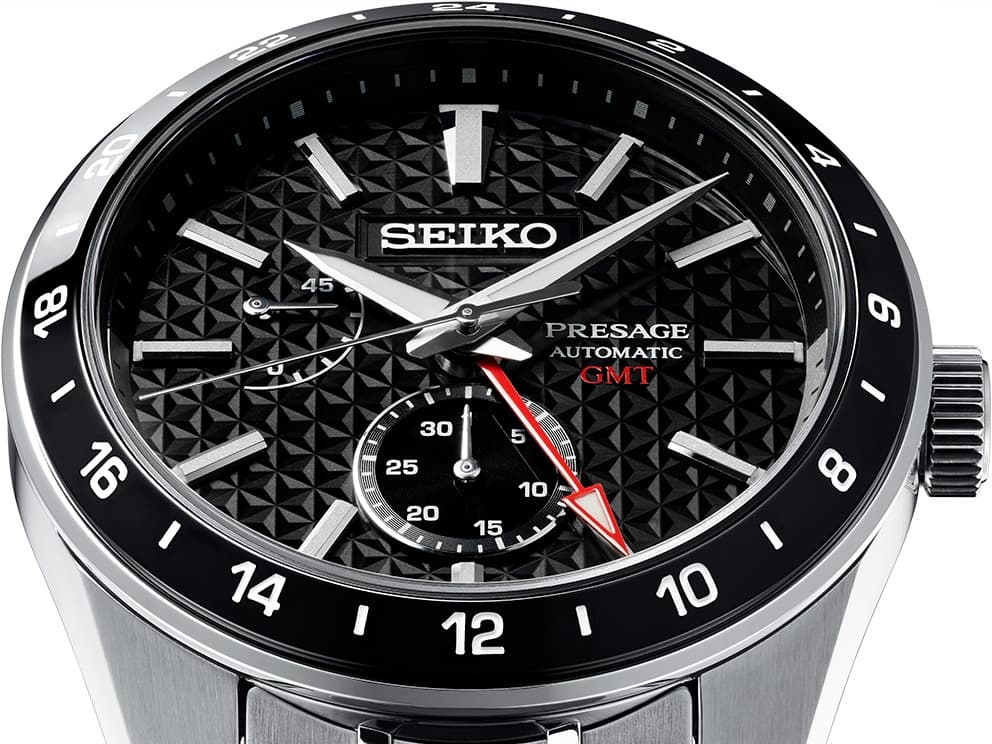
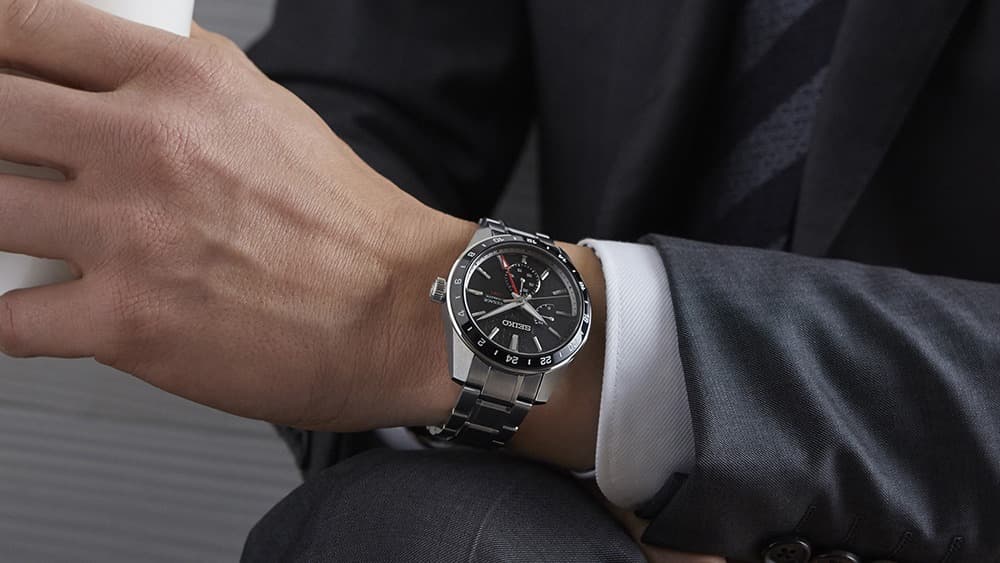
Sumi is the ink used in Japanese calligraphy and sumi-e painting. The colour sits between black and deep grey, shifting depending on the light source and angle. The Asanoha pattern — a traditional geometric hemp-leaf motif — is cut across the dial using the same faceting technique Seiko applies across the Sharp Edged line. In practice, the dial is never the same object twice. In sunlight, individual facets ignite and throw reflections. Under shade, the surface closes and deepens into something close to obsidian. The GMT hand is black-lacquered on the front with a red tip — restrained unless you're looking for it, which is the right call for a watch this considered.
Movement
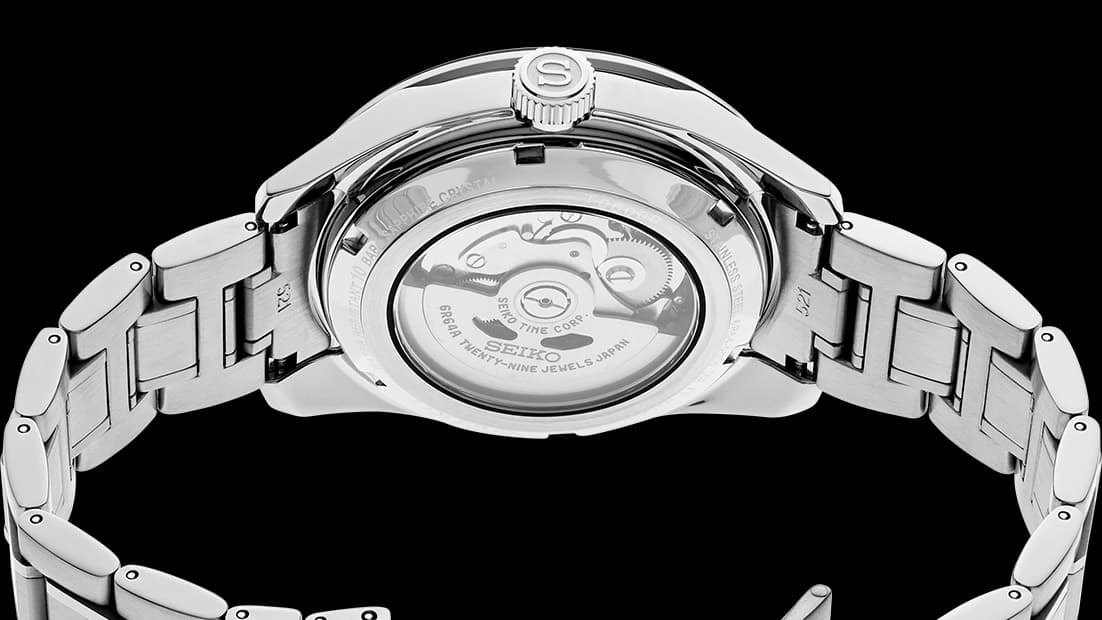
Seiko 6R64. Automatic with manual winding, 45-hour power reserve, 21,600 vph. The GMT complication adds a fourth hand tracking a second time zone against a 24-hour scale printed on the inner ring. A power reserve indicator sits at 6 o'clock — a practical touch Seiko doesn't always include at this tier. The exhibition caseback is screw-down, and through it the 6R64 is neatly presented: clean enough to look at, not a finishing showcase. The mechanism works, the complication earns its place, and the display back shows it off without overpromising.
Wearability
The 49.2mm lug-to-lug is the one honest limitation. It fits a standard wrist cleanly but is at the upper end of comfortable daily wear for smaller wrists — the overhang question is worth checking before committing. The bracelet finish holds up well; the super-hard coating resists the scratching that typically plagues uncoated steel bracelets within weeks of wear. 100m water resistance covers every realistic daily scenario. The screw-down crown seals properly and requires the extra step of locking it back after time-setting, which matters if you're anywhere near water.
Price and Value
$1,400 retail. At that number you're comparing against an Orient Star GMT, the upper end of Seiko's own Prospex range, and the stretched entry of some Swiss alternatives. What the SPB221J1 has that those watches don't is the dial. The Asanoha faceting is genuinely laborious to produce — the kind of craft that costs three or four times this price when it appears on Swiss dials. The GMT complication and the 6R64's power reserve indicator are honest additions, not padding.
If dial quality is your primary criterion and you can reach $1,400, the case for this watch is direct. The SPB221J1 is the better watch than its SPB167 stablemate by a meaningful margin — the complication is useful, the power reserve indicator earns its spot, and the Sumi-iro dial in person is considerably harder to walk away from than any photograph suggests.
Sources
- Seiko — seikowatches.com
- Watchbase — watchbase.com